Raghurajcashcode

Wednesday, 8 October 2014

THE SHUTDOWN SEQUEL IN THE WORKS?

Republicans Hint At Another Government Shutdown Over Obamacare. Seriously.

WASHINGTON -- Less than a year after House Speaker John Boehner (R-Ohio) called the 2013 government shutdown over funding for Obamacare a “predictable disaster,” Republicans are hinting they might be willing to do it again in a few months.
A group of 14 Republicans, led by Sen. Marco Rubio (R-Fla.) wrote to Boehner on Wednesday identifying a provision of the Affordable Care Act that a Government Accountability Office report concluded would require an additional appropriation from Congress in the next fiscal year. According to ThinkProgress, the provision allows the federal government to reimburse insurance companies that underestimate claims they will have to pay with profits from insurance companies that overestimated. In their letter to Boehner, the Republicans wrote that the program “puts taxpayers at risk of a large bailout if insurers systematically lose money on exchange plans.”
The Republicans, including Sens. Rand Paul of Kentucky and John McCain of Arizona, urge Boehner to end the program when Congress votes to fund the government during the lame-duck session after the November elections.
The letter notes that the current continuing budget resolution expires Dec. 11. "Congress will undoubtedly have its feet held to the fire by the American people to pass another stop-gap appropriations bill avoiding a government shutdown,” the Republicans write.
“The American people expect us, as Members of Congress, to fulfill our Oath of Office and defend the Constitution. Therefore, we must act to protect Congress’ power of the purse and prohibit the Obama administration from dispersing unlawful risk corridor payments providing for an Obamacare taxpayer bailout.”
NOTE:this is original link herehttp://tinyurl.com/http-ghj-com


अगले 36 घंटों में आने वाला खतरनाक रूप में होगा चक्रवात

odisa मे काल ,आने की संभावना देखिये  अगले 36 घंटो मे

खतरनाक चक्रवाती तूफान 'हुदहुद' रविवार को आंध्र प्रदेश और ओडिशा के तटों पर दस्तक दे सकता है. राज्य सरकार के अधिकारियों ने बताया कि 'हुदहुद' से निपटने के लिए राज्य सरकार ने जरूरी तैयारी कर ली है.
भारत मौसम विज्ञान विभाग (आईएमडी) के मुताबिक, 'उत्तरी अंडमान सागर और इसके नजदीकी इलाके में तीव्र दबाव ने 'हुदहुद' चक्रवाती तूफान का रूप ले लिया है. यह तूफान बुधवार को उत्तरी अंडमान सागर और इसके पास बंगाल की खाड़ी तक पहुंच गया है. अगले 36 घंटों में यह चक्रवात खतरनाक रूप ले सकता है.
मुख्यमंत्री नवीन पटनायक ने कहा कि राज्य चक्रवाती तूफान की आशंका के खतरे से निपटने के लिए पूरी तरह तैयार है. सभी संबंधित विभागों के साथ चक्रवात के हालात की समीक्षा की गई है. आईएमडी के मुताबिक, 'हुदहुद' उत्तरी आंध्र प्रदेश और इसके समीप ओडिशा के समुद्र तट को 12 अक्टूबर की दोपहर तक पार कर लेगा. इसकी वजह से मछुआरों को समुद्र में नहीं जाने की सलाह दी गई है.


note:this in original post link herehttp://tinyurl.com/http-fhg-com

197 रन पर सिमट गई टीम इंडिया:---

वेस्‍टइंडीज की धमाकेदार जीत:-


197 रन पर सिमट गई टीम इंडिया, वेस्‍टइंडीज की धमाकेदार जीत:--


वेस्टइंडीज ने कोच्चि वनडे मैच में भारत को 124 रनों के बड़े अंतर से हरा दिया और पांच मैचों की सीरीज में 1-0 से बढ़त हासिल कर ली. भारतीय टीम 322 रनों के विशाल लक्ष्य का पीछा करते हुए 41 ओवरों में 197 रनों पर ढेर हो गई. भारतीय टीम की तरफ से शिखर धवन (68) और अजिंक्य रहाणे (24) ने सधे अंदाज में शुरुआत की, हालांकि यह सलामी जोड़ी अभी पूरी तरह टिक भी नहीं पाई थी कि रहाणे रन आउट होकर पवेलियन लौट गए. रहाणे 49 रनों के कुल योग पर दूसरा रन भागने के चक्कर में रन आउट हुए. रहाणे के जाने के बाद भारत कभी भी मैच में वापस आता नजर नहीं आया और लगातार गिरते विकेटों के बीच रन गति भी बरकरार नहीं रख सका.see more
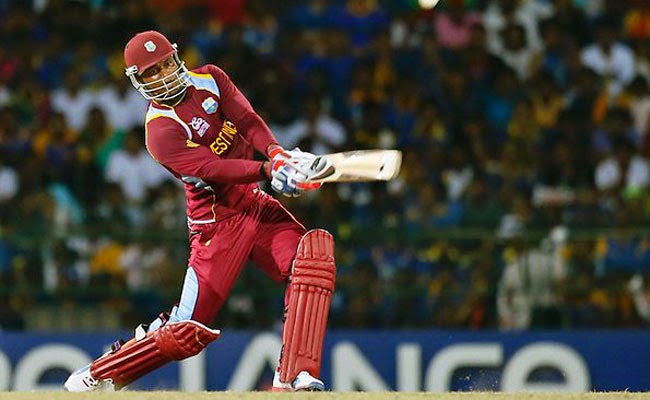
मार्लिन सैमुअल्स की शानदार शतकीय पारी के बूते कोच्चि वनडे मैच में पहले बल्लेबाजी करते हुए वेस्टइंडीज ने 6 विकेट पर 321 रन बनाए. सैमुअल्स ने ताबड़तोड़ बल्लेबाजी करते हुए 116 गेंदों में नाबाद 126 रन का योगदान दिया.

देखें मैच का स्कोरकार्ड...

विराट कोहली (2) और सुरेश रैना (0) ने सर्वाधिक निराश किया. कोहली को जेरोम टेलर ने डारेन सैमी के हाथों कैच आउट करवाया, जबकि सुरेश रैना ड्वायन ब्रावो की गेंद पर क्लीन बोल्ड हो गए.

अंबाती रायडू (13) ने जरूर इस बीच धवन के साथ 27 रनों की साझेदारी कर टीम को संभालने की कोशिश की, लेकिन वह भी 82 के कुल योग पर पवेलियन लौट चुके थे. कप्तान महेंद्र सिंह धोनी (8) और धवन ने इसके बाद बेहद संभलकर खेलते हुए 53 गेंदों में 31 रन जोड़े. लेकिन सैमी ने धोनी को क्लीन बोल्ड कर भारत की कमर ही तोड़ दी. धोनी के रूप में 25.1 ओवर में 114 के कुल योग पर भारत का पांचवां विकेट गिरा और जीत की उम्मीद लगभग खत्म हो गई.

इसके बाद बल्लेबाजी करने आए रविंद्र जडेजा (नाबाद 33) ने धवन के साथ संभलकर पारी को बढ़ाने की कोशिश की, लेकिन इस बार धवन खुद सैमुअल्स का शिकार हो पवेलियन लौट गए और इसके साथ ही भारत की आखिरी विशेषज्ञ बल्लेबाजों की जोड़ी भी टूट गई. धवन ने बेहद धैर्य के साथ खेलते हुए 92 गेंदों का सामना किया और नौ चौके लगाए.

अगले 7.2 ओवरों में भारत के स्कोर में 21 रनों का इजाफा हुआ, जबकि तीन विकेट और गिर गए.

जडेजा ने मोहम्मद समी (19) के साथ आखिरी विकेट के लिए 42 रनों की साझेदारी की, हालांकि यह साझेदारी सिर्फ भारत के हार के अंतर को कम करने वाली साबित हुई. वेस्टइंडीज के सभी गेंदबाजों ने बेहद कसी हुई गेंदबाजी की. रवि रामपॉल, ड्वेन ब्रावो और सैमुअल्स ने दो-दो विकेट चटकाए, जबकि जेरोम टेलर, आंद्रे रसेल और सैमी को एक-एक विकेट मिले.

विंडीज पारी
टॉस हारने के बाद पहले बल्लेबाजी करने उतरी विंडीज टीम की शुरुआत कुछ खास नहीं रही. टीम ने महज 34 रन के स्कोर पर अपना पहला विकेट ड्वेन ब्रावो के रूप में खोया. इसके बाद ड्वेन स्मिथ ने डैरन ब्रावो के साथ संभलकर बल्लेबाजी की. जैसे ही दोनों बल्लेबाजों ने दूसरे विकेट के लिए 64 रन जोड़े, टीम को एक और झटका लगा. स्मिथ 46 रन के स्कोर पर क्लीन बोल्ड हो गए. ये विकेट रवींद्र जडेजा ने झटका. डैरन ब्रावो भी ज्यादा देर क्रीज पर टिके नहीं रह सके, वह 28 रन के निजी स्कोर पर अमित मिश्रा का शिकार बने. इसके बाद मार्लिन सैमुअल्स का साथ देने क्रीज पर आए दिनेश रामदीन. दोनों खिलाड़ियों ने पहले सिंगल-डबल के दम पर टीम को मजबूती प्रदान की, फिर मौका मिलते ही भारतीय गेंदबाजों पर धावा बोल दिया. चौथे विकेट के लिए 165 रनों की साझेदारी हुई. इस दौरान सैमुअल्स ने अपने वनडे करियर का 6वां शतक जड़ा और रामदीन ने अर्धशतक पूरा किया. इस साझेदारी को मोहम्मद शमी ने तोड़ा. पार्टनरशिप के टूटते ही भारतीय गेंदबाजों ने जोरदार वापसी की, खासकर शमी ने विंडीज को लगातार झटके दिए. उन्होंने कीरोन पोलार्ड और आंद्रे रसेल को एक ही ओवर में चलता किया. हालांकि सैमुअल्स क्रीज पर डटे रहे. उन्होंने 11 चौकों और 4 छक्के की मदद से नाबाद 126 रन बनाए. रामदीन ने 61 रन का योगदान दिया. भारतीय गेंदबाजी की बात करें तो शमी ने 66 रन खर्चकर 4 विकेट झटके. इसके अलावा रवींद्र जडेजा और अमित मिश्रा के खाते में 1-1 विकेट गए.


Tuesday, 7 October 2014

THE REPUBLICANS BRACE FOR ANOTHER BLOODY PRIMARY

The message from Republican officials has been crystal clear for two years: The 2016 Republican primary cannot be another prolonged pummeling of the eventual nominee. Only one person ultimately benefited from that last time — Barack Obama — and Republicans know they can’t afford to send a hobbled nominee up against Hillary Clinton.

Yet interviews with more than a dozen party strategists, elected officials and potential candidates a month out from the unofficial start of the 2016 election lay bare a stark reality: Despite the national party’s best efforts, the likelihood of a bloody primary process remains as strong as ever.
Continue Reading
The sprawling, kaleidoscope-like field that’s taking shape is already prompting Republican presidential hopefuls to knock their likely rivals in private and, at times, publicly. The fact that several candidates’ prospects hinge in part on whether others run only exacerbates that dynamic. Ultimately, the large pack won’t be whittled for many months: Republicans have no idea who will end up running, and insiders don’t expect the field will gel in any way until at least the spring of next year See More
note:this is original post link herehttp://tinyurl.com/http-thpj-com

Monday, 6 October 2014

SENATE HANGS BY A THREAD

Battle For The Senate Close And Competitive In Latest Polling.

The battle to control the Senate remains deeply competitive, according to new data from CBS/New York Times/YouGov polling conducted nationwide and NBC/Marist surveys in three key swing states.
"The fight for control of the Senate is stable and tight, with Republicans maintaining the inside track to a majority. ... Nonetheless, the data suggests that the Democrats retain a clear, if difficult, path to victory," The New York Times' Nate Cohn wrote, summarizing the CBS/NYT/YouGov results.
While the two sets of surveys differ on some individual states, their results are largely in line with other recent polling. Other forecasters have similarly found little change in their predictions as a result of the latest polls.
The GOP's chance of retaking the Senate ticked down on HuffPost Pollster's Senate forecast, which incorporates all publicly available polling. One reason for the change: the newest surveys push Sen. Kay Hagan (D-N.C.) up to a 61 percent chance of winning, edging North Carolina out of the tossup camp. Hagan's advantage, though sometimes small, has been consistent over the past month. The 13 most recent polls in the state, including those by partisan pollsters, have all shown her ahead by at least 1 See More
note:this is original post link herehttp://tinyurl.com/qhg7jra

Sunday, 5 October 2014

CATASTROPHE THE WORLD SLEPT THROUGH

Out of control

How the world’s health organizations failed to stop the Ebola disaster.

Tom Frieden remembers the young woman with the beautiful hair, dyed a rusty gold and braided meticulously, elaborately, perhaps by someone who loved her very much. She was lying facedown, half off the mattress. She had been dead for hours, and flies had found the bare flesh of her legs.
Two other bodies lay nearby. Bedridden patients who had not yet succumbed said of the dead, "Please, get them out of here."
Frieden, the director of the U.S. Centers for Disease Control and Prevention (CDC), knew it was no simple matter to properly carry away a body loaded with Ebola virus. It takes four people wearing protective suits, one at each corner of the body bag. On that grim day near the end of August, in a makeshift Ebola ward in Monrovia, Liberia, burial teams already had lugged 60 victims to a truck for the trip to the crematorium.
ABOVE: A sick child, Cynthia, waits outside Redemption Hospital in Monrovia, Liberia, for health workers to remove dead bodies before she can enter.
Frieden had seen plenty of death over the years, but this was far worse than he expected, a plague on a medieval scale. "A scene out of Dante," he called it.
Shaken, he flew back to the United States on Aug. 31 and immediately briefed President Obama by phone. The window to act was closing, he told the president in the 15-minute call.
That conversation, nearly six months after the World Health Organization (WHO) learned of an Ebola outbreak in West Africa, was part of a mounting realization among world leaders that the battle against the virus was being lost. As of early September, with more than 1,800 confirmed Ebola deaths in Guinea, Liberia and Sierra Leone, there was still no coordinated global response. Alarmed U.S. officials realized they would need to call in the military.
Obama eventually ordered 3,000 military personnel to West Africa; about 200 had arrived by the beginning of this month. They will be joined by health workers from countries such as Britain, China and Cuba. Canada and Japan are sending protective gear and mobile laboratories. Nonprofit organizations such as the Gates Foundation also are contributing. But it's not at all clear that this belated muscular response will be enough to quell the epidemic before it takes tens of thousands of lives.
This is an open-ended crisis involving a microscopic threat on the move. This week came the unsettling news that the Ebola epidemic has now reached across the Atlantic Ocean to a hospital in Texas, where a Liberian man has tested positive for the virus.
So how did the situation get so horribly out of control?
The virus easily outran the plodding response. The WHO, an arm of the United Nations, is responsible for coordinating international action in a crisis like this, but it has suffered budget cuts, has lost many of its brightest minds and was slow to sound a global alarm on Ebola. Not until Aug. 8, 4 1 ⁄ 2 months into the epidemic, did the organization declare a global emergency. Its Africa office, which oversees the region, initially did not welcome a robust role by the CDC in the response to the outbreak.
Previous Ebola outbreaks had been quickly throttled, but that experience proved misleading and officials did not grasp the potential scale of the disaster. Their imaginations were unequal to the virulence of the pathogen.
"In retrospect, we could have responded faster. Some of the criticism is appropriate," acknowledged Richard Brennan, director of the WHO's Department of Emergency Risk Management and Humanitarian Response. But he added, "While some of the criticism we accept, I think we also have to get things in perspective that this outbreak has a dynamic that's unlike everything we've ever seen before and, I think, has caught everyone unawares."
The epidemic has exposed a disconnect between the aspirations of global health officials and the reality of infectious disease control. Officials hold faraway strategy sessions about fighting emerging diseases and bioterrorism even as front-line doctors and nurses don't have enough latex gloves, protective gowns, rehydrating fluid or workers to carry bodies to the morgue.
"We cannot wait for those high-level meetings to convene and discuss over cocktails and petits fours what they're going to do," exclaimed Joanne Liu, international head of Doctors Without Borders, when she heard about another U.N. initiative. Her group was among the first to respond to the viral conflagration, and it kept its staff in West Africa throughout the crisis.
West Africa was ill-equipped for an Ebola disaster because civil war and chronic poverty had undermined local health systems and there were few doctors and nurses. Health workers in the region had never experienced an Ebola outbreak and didn't know what they were seeing in those first critical months. In the spring the outbreak seemed to fade, making officials overconfident. And then the virus made the leap from rural villages to crowded cities.
Local customs in handling the dead led to further infections. Some West Africans believe that the day you die is one of the most important days of your life. The final farewell can be a hands-on, affectionate ritual in which the body is washed and dressed, and in some villages carried through the community, where friends and relatives will share a favorite beverage by putting the cup to the lips of the deceased before taking a drink.
And finally, the virus itself played a critical role in accelerating the crisis. Ebola, although not nearly as contagious as some viruses, is unusually lethal and commensurately terrifying. Many foreign health workers and volunteers fled the region, and few people rushed in to take their place.
This is both a biological plague and a psychological one, and fear can spread even faster than the virus.
'This is relatively small still'
A virus is not really alive, in the formal sense of the word, as it cannot do anything outside of a host. Ebola is a filovirus, and looks like a piece of spaghetti. The protein envelope surrounds a strand of RNA, the simpler cousin of DNA. You could say it is pure information with instructions for replication.
Ebola is one of a number of viruses that cause "viral hemorrhagic fever." What makes it so deadly is that it can take over the machinery of many kinds of cells, replicating quickly. It shuts down or misdirects parts of the immune system and sends the rest into hyperdrive, causing the victim to suffer fever, headaches, vomiting, diarrhea and dehydration. Death can come within days from multiple organ failure.
Ebola isn't nearly as contagious as, say, measles or influenza. It is transmitted only through bodily fluids after the fever and other symptoms have occurred. But the incubation period, after infection and before the person becomes symptomatic, typically lasts about a week, or as long as three weeks. People who are infected can travel a great distance before they begin to shed the virus. Initial symptoms are similar to those caused by malaria and influenza, confounding a proper diagnosis.
The first Ebola cases surfaced in late 2013 in Guinea, in the rain forest in the district of Guéckédou, close to borders with Liberia and Sierra Leone. No one knows exactly when the virus jumped into the human population, or from which animal species - a fruit bat is one possibility - but the first victim is believed to have been a 2-year-old girl or someone close to her.
Doctors at first assumed they were looking at Lassa fever, a viral hemorrhagic fever similar to Ebola, as dozens of people began falling sick and more than half of them were dying. But then on March 23, the WHO posted a notice on its Web site:
"The Ministry of Health (MoH) of Guinea has notified WHO of a rapidly evolving outbreak of Ebola virus disease (EVD) in forested areas of south-eastern Guinea. As of 22 March 2014, a total of 49 cases including 29 deaths (case fatality ratio: 59%) had been reported."
The virus spread from Guinea to Liberia, where two people died in late March. On April 1, Sierra Leone reported that two of its citizens had died in Guinea, probably from Ebola, and that their bodies had been returned to their native country See More
note:this is original post link herehttp://tinyurl.com/http-vdbg-com

Saturday, 4 October 2014

REPORT: ISIS NEARS BAGHDAD

The Islamic State reportedly on Baghdad’s outskirts after week of victories.

Islamic State reportedly on Baghdad’s outskirts after week of victories
IRBIL, IRAQ — Islamic State militants have taken control of key cities in Iraq’s western province of Anbar and have begun to besiege one of the country’s largest military bases in a weeklong offensive that’s brought them within artillery range of Baghdad.
The Islamic State and its tribal allies have dominated Anbar since a surprise offensive last December, but this week’s push was particularly worrisome, because for the first time this year Islamist insurgents were reported to have become a major presence in Abu Ghraib, the last Anbar town on the outskirts of the capital.
“Daash is openly operating inside Abu Ghraib,” according to an Iraqi soldier, who used a common Arabic term for the Islamic State. “I was at the 10th Division base there two days ago, and the soldiers cannot leave or patrol,” he said, asking that he be identified only as Hossam because Iraqi soldiers are barred from speaking with foreign reporters. “Daash controls the streets.”
Hundreds of miles to the west, Islamic State forces continued their push into the Syrian Kurdish city of Kobane, where it appeared unlikely that Turkey would intervene to stop the advance. Kurdish officials from the town said the Turkish government had yet to respond to their pleas for weapons, and reports from the Turkish-Syrian border said there was no evidence Turkey was preparing to take action.
Hossam, whom a McClatchy special correspondent interviewed in Baghdad, said he’d had a difficult time leaving Abu Ghraib for Baghdad to mark the Eid al Adha holiday Saturday. “I had to use a fake ID card that said I was Sunni,” he said, reflecting the concern among Shiite Muslim Iraqi soldiers about the Islamic State’s execution of Shiites it’s captured. “Daash controls the entire area except the army bases and prisons. They’re just a few (miles) from Baghdad.”
His account was backed by Hamad Hussein, a resident of the Saadan section of Abu Ghraib, who said the Islamic State had taken control of virtually all the southern sections of the area, including the villages of Saadan, al Nuaymiya and Kan Tari.
A diplomat in Irbil, the capital of the autonomous Kurdistan region, said an Islamic State presence in Abu Ghraib would put Baghdad International Airport within artillery range of the militants.
“We know they have captured substantial numbers of 155 mm howitzers,” said the diplomat, whose country is participating in the U.S.-led anti-Islamic State coalition. The diplomat spoke only on the condition of anonymity, lacking permission to brief the news media. “These have a range of about (20 miles) and if they are able to hold territory in Abu Ghraib then the concern they can shell and ultimately close BIAP becomes a grave concern.”
The airport is a key lifeline for Western embassies and holds a joint operations center staffed by U.S. military advisers.
Anbar is a predominantly Sunni Muslim province that remains deeply suspicious of the Shiite-dominated government in Baghdad, and the Islamic State has pressed to expand its control there since last winter’s initial offensive. In the past week, the militants have scored a string of other victories in the province.
Islamic State militants seized control of most of Hit, a key pipeline town north of the provincial capital of Ramadi, on Thursday and were pressing an assault on Ramadi itself, according to Iraqi news accounts. At least 74 soldiers were killed and dozens were missing after the militants overran Hit, state news media reported late Thursday.
Islamic State militants also captured an entire regiment of Iraqi tanks, the reports said, though it was unclear how many vehicles that represented. In a Western military, regiments generally have 38 to 55 tanks, but Iraqi regiments have long been undermanned due to corruption and problems with maintenance.
The advance on Hit may have been in preparation for an assault on the Asad air base nearby, Iraq’s largest military facility and the main base for American troops in Anbar during the U.S.-led occupation. Reports indicated the base had come under harassing attacks.
Islamic State militants also have besieged a military base that belongs to the 30th Mechanized Brigade at Albu Aytha, north of Ramadi. The outcome of the battle was unclear, with some reports saying the assault had trapped 300 to 600 soldiers, while government media reported that the base had withstood a major attack.
Two smaller outposts in Anbar have been overrun in a similar fashion in the last two weeks, and residents of Fallujah, which fell to the Islamic State last winter, have reported seeing militants parading hundreds of captured soldiers through that city’s streets as recently as last weekend.
Although the fate of those prisoners remains unknown, the Islamic State typically conducts mass executions of Iraqi army prisoners, particularly if the captured men are Shiites, whom the group considers apostates. The group has repeatedly released mass execution videos a few days or weeks after such events.
The biggest concern for Western military advisers was the report that Islamic State militants were moving freely in Abu Ghraib, which controls the western approaches to Baghdad from Anbar, Jordan and Syria. Its loss would severely limit the Iraqi government’s ability to send reinforcements to a small number of bases in Anbar that remain in government control, including at Ramadi and Haditha as well as Asad air base, which lies north of Ramadi.
Already, Islamic State forces’ influence stretches from Fallujah through Abu Ghraib to Yusufiya, Baghdad’s westernmost suburb. So far, the highway that links those locations remains in government hands, as does the infamous Abu Ghraib prison, where U.S. soldiers abused Iraqi prisoners in the early years of the Iraq War. But while the government has dispatched more soldiers to reinforce its hold on the highway, the Islamic State’s control of the surrounding areas makes the government’s hold appear tenuous.
Read more here:http://tinyurl.com/http-morenews-com
note:this is original post link herehttp://tinyurl.com/http-ghgv-com